Table of Contents
Navigating a New Logistics Landscape
Logistics Automation Is No Longer Optional
Today’s logistics landscape is more complex than ever. As shippers navigate rising customer expectations, ongoing global uncertainty and heightened regulatory pressure, the industry is undergoing a profound transformation.
To better understand these changes and how businesses are adapting, the United States Postal Service (USPS) worked with Provoke Insights to conduct in-depth interviews with shipping and logistics leaders.[1] The findings explore the evolving world of logistics, the key challenges shippers face, and the various tactics and technologies they’re adopting to keep pace.
Navigating a New Logistics Landscape
Today’s logistics leaders face wide-ranging challenges in an increasingly complex environment. Many of the interviewees describe today’s supply chains as volatile and chaotic, affected by a multitude of internal and external pressures, including:
- Rising consumer demand for shipping speed and transparency
- Labor shortages impacting every stage of fulfillment
- Global supply chain disruptions resulting from geopolitical tensions, natural disasters and more
- The Amazon Effect, which has reset customer expectations around speed, visibility and seamless returns—putting pressure on logistics to keep pace without Amazon’s scale
Insights from the experts
“[The supply chain is] volatile, complex and disrupted by COVID-19, faster shipping demands, and social media-driven demand spikes.”
— Director of supply chain at a health and beauty company“[The supply chain is] very difficult and it’s very complicated. Everything has to be by the book. There’s no room for error.”
— Director of supply chain at a medical supplies company“[The supply chain is] complex because there are a lot of moving parts. There are a lot of things to constantly keep track of.”
— Senior manager of shipping and procurement at a medical device companyFor companies with limited resources and budget constraints, accessing the latest tools and technologies can be difficult. But making even small changes to automate supply chain operations can come with big rewards.
Logistics Automation Is No Longer Optional
Logistics and supply chain automation has become the industry standard. From order entry to warehouse management, many future-thinking shippers are leveraging application programming interfaces (APIs) to streamline operations and increase efficiencies.
Several of the interviewees noted that even modest steps—such as automating order entry or compliance tracking—have dramatically reduced errors while freeing up time for higher-value tasks. In a market where speed and accuracy are integral to customer loyalty, automation is no longer optional—it’s a prerequisite to success.
Insights from the experts
“Five years ago, [logistics were] more manual. Now, it’s a lot more automated. Tools can deliver the results we need in real time. We’re not having to comb through data. We can get summaries and in-depth analyses automatically. We use a lot of automation tools through our 3PL companies [and] WMS platforms like ShipStation.”
— Director of operations at a consumer household goods company“Everything is now on a tablet as opposed to the clerk writing it, which saves a lot of time. Years ago, they had to search [and] go into the file. The time element has lessened now with our logistics process. The tablets are easier, and they store information and it’s easy to gain information.”
— Director of supply chain at a home accessories company“Our IT lead has software that can tell us what time every package is going out and when it’s delivered, [and] we can track it right away. So that helps in a lot of ways.”
— Director of supply chain at a medical supplies companyWith the right automation tools in place, companies can:
- Reduce errors by minimizing manual data entry and standardizing processes, allowing for more accurate fulfillment
- Free up labor and resources by automating repetitive tasks, allowing employees to shift their focus to higher-value work
- Provide real-time visibility with tracking at all stages of the supply chain, allowing for faster responses and better coordination across the supply chain
- Lower costs by reducing labor needs, errors and waste
Tools and Tech to Get Started With Automation
Though getting started with automation can seem daunting, there are many affordable, scalable solutions available for smaller businesses. The following tools can integrate easily with existing logistics operations:
- Informed Visibility® toolarrow_right_alt — This free tool integrates data from USPS processing and sorting systems so businesses can track packages throughout each stage of delivery. This makes it easier to provide customers with timely updates and resolve any issues before they reach customers. The detailed shipment data can also support analytics to optimize shipping routes, improve carrier selection and identify bottlenecks in the supply chain.
- USPS Web Tools®/APIsarrow_right_alt — USPS offers various integrative tools to automate the shipping process, helping with everything from price calculation and address verification to label creation, package tracking and delivery date estimates.
- Click-N-Ship Business Pro™arrow_right_alt — Designed for small and medium-sized businesses, this tool offers a streamlined way to ship at your convenience, with easy-to-use database integration, tracking and reporting tools.
- Label Broker®arrow_right_alt — Label Broker helps e-commerce businesses and merchants provide their customers with an easy way to print outbound and return shipping labels.
- USPS Shiparrow_right_alt — This platform allows for commercial package payment, verification, and end-to-end visibility for a range of domestic and international products. After submitting package documentation, accurate postage amount is determined and charges are automatically applied to your account.
Insights from the experts
“Our own order management system coordinates with [the USPS] API. Their API is validating addresses, generating labels and then tracking those packages in real time. That’s through [the warehouse management system] (WMS). It feeds into our own order management system.”
— Director of operations at a consumer household goods company“We use their label broker because we try to use a lot of flat rate packages, because we can stuff them to the gills. As long as it fits in the box, it’s a flat rate.”
— Owner/president of an arts and crafts companyWhich USPS tools have helped you automate your logistics operations?
All of these USPS automation tools can help create more efficient, streamlined supply chain operations. Learn morearrow_right_alt about USPS Web Tools/APIs to see which ones best fit your business needs.
Keep the conversation going!
Logistics Robotics Offer Efficiency at Scale
More advanced technologies, such as robotics, represent the next major frontier in logistics automation. The professionals interviewed see widespread adoption of robotics as inevitable. With systems that can handle warehousing, fulfillment, picking and packing tasks with precision and accuracy, these companies anticipate a significant reduction in human error.
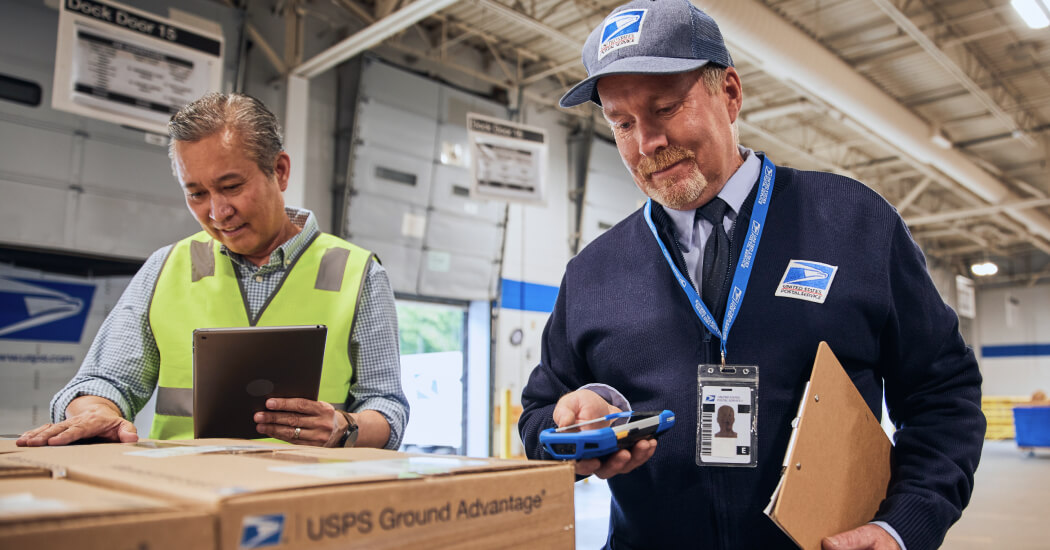
Organizations like USPS are already demonstrating what large-scale robotics integration looks like in action. Recent investments in advanced tech have enabled USPS to better serve its customers. For example, deploying more than 600 new package processing systems over the last five years has increased daily package processing capacity from 60 million to 88 million.[2]
With one of the largest material-handling systems in the world for moving mail, USPS also maintains more than 200 miles of conveyors within its postal facilities.[3]
USPS Ground Advantage
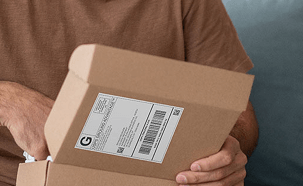
Through these technological advancements, USPS has streamlined its shipping offerings. With USPS Ground Advantage®arrow_right_alt , shippers can access affordable shipping solutions—whether they’re shipping packages weighing 70 oz. or 70 lbs.
The Human Touch Still Matters
Though automation is transforming the supply chain, the human touch is still essential to a positive customer experience. Logistics leaders stressed this point in their interviews—particularly the importance of working with carriers in a true partnership capacity.
They highlighted the need for ongoing, reliable communication with carriers, as well as maintaining a human connection with customers. Several also expressed concerns about over-automation, citing cybersecurity risks and lack of personal service as top issues.
Insights from the experts
“Technology helps, but you can’t lose the human side of the customer experience.”
— Managing director at a motor manufacturing company“There needs to be ongoing communication with shipping providers, not just initial tutorials. I don’t have time to sit on hold during busy seasons. Technology can’t replace that kind of support.”
— Director of supply chain at a home accessories companyUltimately, the logistics leaders who stay ahead will be the ones who combine efficiency with empathy.
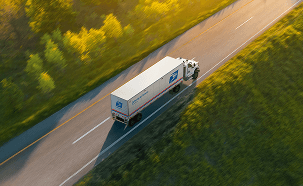
USPS Ground Advantage
USPS has a dedicated team of shipping experts ready to help you streamline your operations and integrate the tools you need to scale your business. Learn morearrow_right_alt.
Key Takeaway
As customer expectations rise and technology advances, the shipping and supply chain environment is becoming increasingly complex. To meet customer demand and maintain a competitive edge, adopting a digital-first, people-centric strategy is essential.
By balancing automation with a personal, human touch, today’s logistics professionals are making practical, incremental improvements to their operations. From easy-to-access APIs to more advanced robotics innovations, the future of logistics holds tremendous opportunity. The businesses that embrace this balanced approach will be best positioned to thrive in an ever-shifting logistics landscape.
Footnotes
keyboard_arrow_down- [1]“The Future of Logistics: Leveraging the USPS Technology Stack: Qualitative Research,” Provoke Insights, commissioned by USPS, Sept. 3, 2025. arrow_right_alt
- [2]“Postal Service Ready to Deliver for 2025 Holiday Season,” PR Newswire, Oct. 22, 2025. arrow_right_alt
- [3]“200 Miles of Conveyors,” Postal Facts, United States Postal Service. arrow_right_alt